Heza
Switch-backing up mountainsides and across small hand-built log bridges, visiting Heza Washing Station at 1960 m.a.s.l can be likened to an off-road adventure. To say Heza Washing Station is ‘remote’ would be an understatement, and yet the community that lives in the surrounding hills is a special one, comprised mostly of coffee farmers. Heza means ‘beautiful place’ in Kirundi, the local language of Burundi. With panoramic views and an ever-changing East African sky, this washing station lives up to its name. Heza Washing Station processes its coffee by pumping spring water from a nearby natural spring.
During the natural process, coffee cherries are floated and hand-sorted, then placed directly on the drying tables. The whole coffee cherry spends between 25 and 30 days drying in its own skin, slowly turning from a deep red to a prune-like purple-black once it’s fully dry and at the preferred 10.5% moisture level.
Mutana
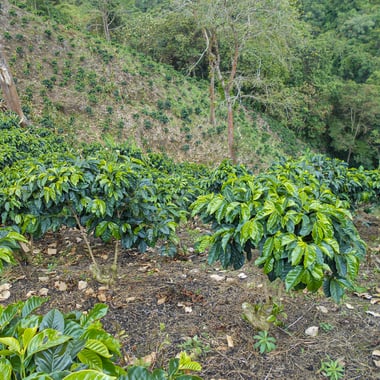
Mutana’s hills seem to roll into infinity. The hills are covered in a never-ending tapestry of green and possess the most breathtaking panoramic views. The edge of the Kibira Forest looms only a couple of kilometers away, allowing mist to drift from the forest and tumble onto farmers’ fields daily. With its mix of silty and sandy soils, Mutana can grow everything people like to eat. Wheat, cassava, potato, onions, peas, beans, sweet potato, passion fruit, and tea are grown alongside coffee. Tucked far away in the heart of the hill, hidden well beyond eye’s reach, is a waterfall. In order to reach it, you’d have to scramble down a steep hill covered in eucalyptus trees, cross over a small river, pass through a tea plantation, and follow a narrow dirt track.